
do i even want love?
deconstructing my desire for love

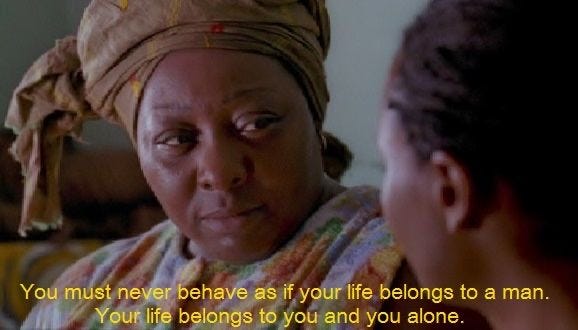
Why are we so obsessed with the idea of being claimed?
We’ve absorbed the belief that to be desired is to be complete, that if someone is not actively choosing us, wanting us, loving us, then something must be missing. That singleness is not a state of being but a temporary condition, a gap that needs to be filled. We don’t look at children and describe them as “single,” as if they are lacking something essential, so why do we grow up and suddenly internalize the idea that being unattached means we are incomplete or unfinished?
I am probably the most guilty of this. I have spent much of my life romanticizing love, relationships, and romance as if they are the pinnacle of existence itself, as if life truly begins once you find your person. I’ve treated love like the thing that would finally anchor me, finally organize my life into something coherent and meaningful. But as I’ve grown older, and as I’ve continued deconstructing nearly every belief system I was raised with, I’ve realized something unsettling: I have never actually deconstructed my desire for love.
I’ve spent years deconstructing religion, identity, gender, and even relationships themselves. I’ve questioned what relationships can look like, how they don’t have to follow rigid scripts, and how they can be customized to meet people where they are. But I’ve never stopped to ask a more foundational question: do I genuinely desire romantic love, marriage, and children, or is that desire something I’ve been primed and conditioned to believe I want?
I almost don’t know who I am without my desire for love. I’ve always been a self-proclaimed romantic, someone who loves love, someone who loves romance. Hell, even in my TikTok bio, I call myself a lover. I’ve made it such a central part of my identity that I’ve never stopped to question whether it’s truly who I am, or if it’s just what I’ve been taught to want, what I’ve learned to perform, or what I’ve assumed I should be.
We live in a time where women can see so many different possible paths laid out in front of them. Marriage, singleness, motherhood, child-free autonomy, lives built entirely on their own terms. Intellectually, I know all of these are options, and I even tell other women that they are all valid and available choices. But if I’m being honest, I don’t think I’ve ever truly allowed myself to consider a fully autonomous, child-free, single life as a real possibility for me. It’s always existed in theory, never in practice.
It feels similar to saying, “Of course I could sell everything and move to Costa Rica.” Technically, yes, that is an option, but in reality, you’re not actually planning for it or envisioning your life there. That’s how I’ve treated the idea of lifelong singleness and child-freedom. Something that exists as a concept, but not as a future I’m allowed to seriously imagine. And I’ve started to ask myself why I automatically assume that marriage and children are more likely for me, more natural, more inevitable.
I often say that I still desire love, marriage, and children, but I’m realizing that I’ve never really interrogated where that desire comes from. How much of it is truly mine, and how much of it has been inherited through family expectations, religious upbringing, media, capitalism, and the quiet fear women are taught to feel about ending up alone? I’ve accepted those desires as default truths without questioning whether they actually align with who I am.
I haven’t allowed myself to fully step into the shoes of a woman who chooses herself completely, not as a placeholder, not as a reaction, but as a conscious decision. A woman who is single not as a phase, but as a way of living. A sovereign woman. But, there’s been a kind of internal barrier there, one that doesn’t let me fully see myself in that life, even though I can conceptually understand it. And I recognize that feeling, because I’ve felt it before.
It’s the same resistance I felt when I first began questioning Christianity. I knew people left. I knew it was an option. I knew I technically had freedom. But I was afraid of what that choice would make me, afraid of losing myself, afraid of becoming unrecognizable to the version of me that was raised with certain values and expectations. So I delayed the questioning. I kept the door cracked but never fully opened it. I’m realizing now that I’ve been doing the same thing with love, marriage, and children.
Love, marriage, and parenthood can be beautiful, meaningful experiences, but they are also intentional commitments that come with real responsibility. Loving someone long-term means being responsible for another person’s emotional world, their needs, their suffering, their joy. Marriage isn’t just romance; it’s caretaking, accountability, and sustained effort. And while I’ve always understood this intellectually, I don’t think I’ve ever truly sat with what that means for the rest of my life.
When I think honestly about how I operate, I notice something that complicates the picture even further. Even in healthy relationships, I often feel like being partnered pulls energy away from my relationship with myself. This isn’t necessarily about being with the wrong person; it’s about the reality that intimacy requires time, emotional labor, and mental space. Energy is finite, and when you give a portion of it to someone else, there is simply less left to give elsewhere.
When I’m single, I am able to pour myself more fully into my creative life. I write more, read more, move my body more consistently, and disappear into films and ideas without interruption. My inner world feels spacious. When I’m with someone, even someone I care about deeply, some of that spaciousness contracts. That isn’t a moral failure or a flaw in relationships, it’s just the nature of sharing a life.
I’m also realizing that I am, quite honestly, a highly irritable person. I get overstimulated very easily, and I need a lot—a lot—of alone time to feel regulated and like myself. I don’t like being interrupted when I’m in my own energy or pulled out of a flow state once I’ve finally settled into it. I love my friends deeply, and sometimes even responding to texts feels like too much.
When I think about long-term partnership and especially parenthood through that lens, I have to be honest with myself. Children don’t care if you’re overstimulated or irritable or touched out. When they need you, you show up, immediately, every time. And maybe one day I’ll feel more resourced for that kind of responsibility, but right now, I don’t. Right now, even taking care of myself feels like real work, and I’m not interested in committing to something that would require me to constantly override my own limits.
At this stage of my life, I genuinely cannot imagine that level of constant responsibility without feeling depleted. Maybe that will change in my thirties. Maybe it won’t. But instead of forcing myself into a narrative I’m not ready for, I’m trying to listen honestly to where I am now, without shame or defensiveness.
Maybe a complete life doesn’t always look like marriage and children. Maybe it looks like quiet mornings, waking up without urgency, drinking tea, meditating, reading, writing, and moving through the day at my own pace. Maybe it looks like pouring myself into my work, nourishing my body, and ending the day with a glass of wine, a cup of tea, or a joint.
And maybe in that kind of life, intimacy doesn’t go away, it just isn’t the center of everything. It’s not something you’re constantly orienting your life around or planning for. It’s more like something that happens when you decide you want it to happen. You can be quiet for a long time, really in your own world, and then one day decide you want closeness, or touch, or to share space with someone, and you can let yourself have that without it having to turn into anything bigger.
You can invite someone into your space, let there be intimacy and warmth and affection, and then let that moment end. They leave, and you go back to yourself, back to silence, back to your routines, back to being alone in a way that actually feels grounding, without there being this automatic expectation that now you have to keep showing up, keep checking in, keep holding space, keep tending to another person once you’ve returned to your own. And that doesn’t mean there’s no love in your life, or no connection, or no intimacy at all. It just means you get to decide when you want to open your space and when you don’t, and neither choice has to mean anything more than what it is.
I think it’s important for women to listen to older women, especially those who have lived the lives we’re told to aspire to. Not just the cautionary stories, but even the beautiful ones. Because even in the most loving marriages and the most nourishing relationships with children, women consistently emphasize the same thing: this life requires effort, responsibility, and sacrifice, even with the best partner. This is something you have to choose every. single. day. And I don’t think they say that to scare us or discourage us from marriage, but to make sure we enter these commitments with our eyes open. So we enter these commitments with clarity, not fantasy. And I’m realizing that listening to the full truth of their experiences, the beautiful and the difficult, is essential.
I’m not rejecting love, marriage, or children. I’m questioning the assumption that I must want them by default. I see the value in multiple paths, and for the first time, I’m trying to choose based on what genuinely serves me, not what I’ve been told will make me feel complete or less alone.
Because maybe the most dangerous lie women are sold isn’t that love is beautiful, but that without being claimed, our lives are unfinished. And I’m beginning to believe that a sovereign life, one rooted in self-possession, choice, and return, is already whole.
I remember telling my colleages that I wasn't single. Did I have a boyfriend? Nope. I just wasn't looking. They rolled their eyes and I just shrugged. It's exhausting to keep explaining this exact concept, so thank you for putting it into such well written words. I've never experienced romantic love, and I'm not sure if it's ever going to be apart of my story… but I know my life can be fulfilling without it. Sometimes it's painful, sometimes it's freeing, but it always has me in the centre.
I am one of those older women who has been married for over thirty-years. I wish I had half of your wisdom at your age. I've spent half of my life in a box of responsibility to others. I have raised three boys to men. Two of them make me incredibly proud of the decision to be their mother. One of them is 30 years-old and still a significant drain of my energy. I'm holding some pretty firm boundaries with him now. Two of my boys are autistic and they required more than I ever dreamed of.
Do I want love? I think we all do in some form, but nothing about it has to look traditional.
Reading your words almost brought me to tears, because I want to scream, "Don't do it! Don't get married anytime soon! And definitely, don't have kids until you're ready to give yourself to the responsibility, fully.
There's so little about marriage and raising children that is romantic. I think the best marriages come from a mature decision and a lot of thought about motives. Deconstructing the whole institution, and especially the responsibility of children. Having them is nothing to take lightly.
I'll be subscribing to read more of your wisdom. Thank you for this insightful, incredible, writing.